
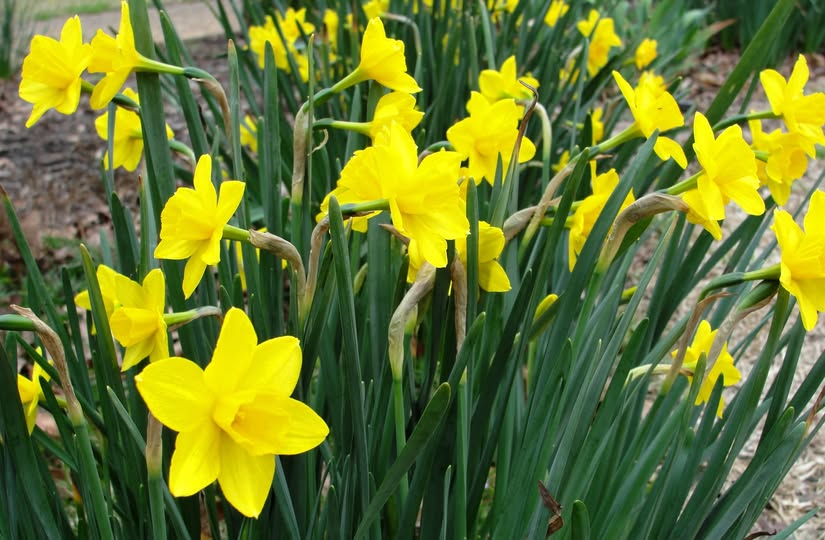
Fragrant Jonquil ‘Sweetness’: Sunny Yellow Spring Blooms
This old-fashioned staple has it all – sunny, deep-yellow flowers with neat, slightly ruffled cups and wide petals of the same color. It also boasts one of the best fragrances of all jonquils, is a prolific naturalizer and, in many seasons, will even produce secondary blooms. Easy to force for early flowers indoors, ‘Sweetness’ brings a cheerful burst of color and scent at a time when gardens are just beginning to wake up. At 12” to 14” tall, it is a dependable mid-season bloomer with a graceful habit that works beautifully in borders, woodland edges, containers, and informal drifts.
Planting and Growing Conditions
Like other jonquils, ‘Sweetness’ performs best when planted in well-drained soil where the bulbs receive plenty of winter and spring light. Plant bulbs in the fall, setting them several inches deep and grouping them in clusters for the most natural effect. Once established, the bulbs require very little attention and will often multiply over time, returning each spring with a fuller display.
Garden Uses and Indoor Forcing
Its strong fragrance makes it especially valuable near walkways, patios, entries, and cutting gardens, where the scent can be enjoyed up close. The flowers pair well with grape hyacinths, early tulips, pansies, and other spring bulbs, while their compact height helps them fit easily toward the front of a planting bed. For indoor forcing, chilled bulbs can be potted and brought into warmth to produce bright, fragrant blooms before outdoor flowers appear.
Long-Term Care and Maintenance
After flowering, allow the foliage to remain until it yellows naturally; this gives the bulbs time to store energy for the following year. Avoid overly wet sites, but otherwise ‘Sweetness’ is a forgiving, long-lived choice for gardeners who want a classic spring flower with exceptional perfume, reliable performance, and the ability to spread into generous colonies over time.
This bulb will be among the many plants offered in the upcoming Bulbs to Blooms Conference and Sale on October 24th from 9-1 at Pollard United Methodist Church. Admission is free. Online shopping begins October 12-21, with order pick-up beginning at 10:00 a.m. on the day of the sale. For more details visit this LINK or call (903)590-2980.
The secondary blooms on ‘Sweetness’ make such a difference in extending the garden display, especially when planted along walkways where you catch the fragrance daily. In my beds, pairing them in drifts with grape hyacinths has been the most reliable combination, as the compact 12- to 14-inch stems keep everything balanced without flopping over. Do you find that dividing established clumps every three or four years helps maintain flower size, or do they hold up well left completely undisturbed?
As long as the flowers don’t seem crowded, division isn’t necessary. But division is recommended every 3-5 years if you notice the flowers are smaller or fewer than normal. Over time, bulbs form small clumps that compete for nutrients, water, and light, leading to more foliage than flowers or smaller flowers. Division separates these flowers and gives them a chance to grow as nutrients, water, and light become more available.
Love the combination of ‘Sweetness’ and grape hyacinths. Thanks for the comments.