Mount Hood Daffodil Guide: Classic White Blooms for East Texas
Few spring-flowering bulbs have earned the lasting admiration of gardeners like the ‘Mount Hood’ daffodil. Introduced in the Netherlands in 1938, this classic cultivar has remained a garden favorite for generations and has received the Royal Horticultural Society’s Award of Garden Merit, a distinction recognizing plants with proven garden value and reliable performance. With its large blooms, dependable vigor, and graceful form, ‘Mount Hood’ performs well in East Texas, adapting readily to a variety of landscape settings, from naturalized plantings to cottage gardens and formal designs.
Role in Modern Garden Design
The appeal of ‘Mount Hood’ extends beyond its individual beauty. Nearly a century after its introduction, this well-established cultivar remains a perfect example of how a thoughtfully selected plant can continue to feel fresh and relevant in the landscape. Its ivory-white blooms illustrate why white flowers continue to play an important role in today’s garden design. Their versatile appearance complements every color palette, brightens shaded spaces, and creates a sense of refinement and balance that works beautifully with both traditional and contemporary landscapes.
Flower Characteristics & Bloom Stages
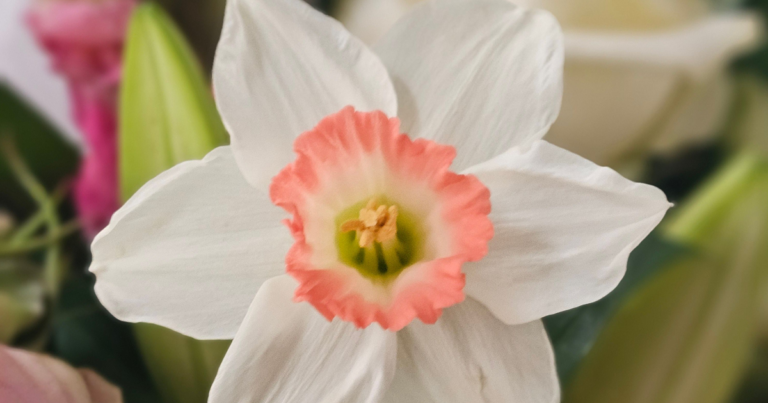
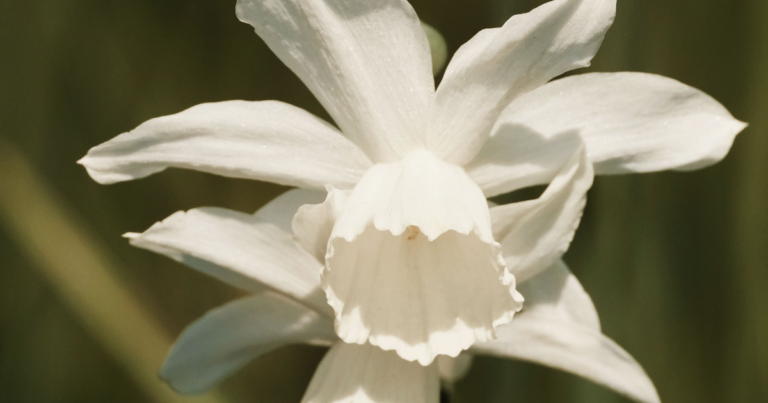
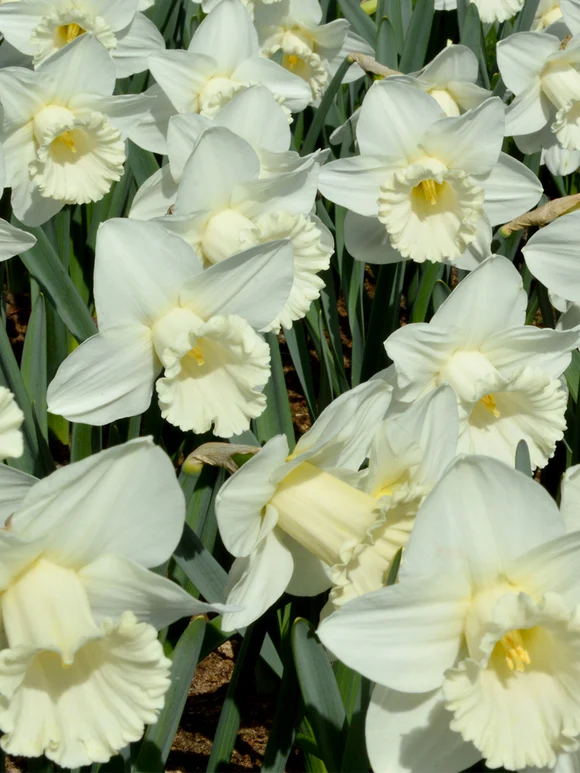
In mid-spring, ‘Mount Hood’ opens with broad ivory-white petals surrounding a soft, creamy yellow trumpet. As the flower matures, the trumpet gradually fades to ivory, creating an almost pure white bloom. The large flowers, often 4 to 5 inches across, are lightly fragrant and held on sturdy 16- to 18-inch stems that stand up well to typical spring weather. Their elegant form makes them equally impressive in the garden or as a long-lasting cut flower.
East Texas Planting & Care Instructions
Suited to USDA Zone 8b, ‘Mount Hood’ thrives in East Texas when planted in well-drained soil with full sun to light afternoon shade. Plant bulbs in autumn after the soil has cooled, placing them about 6 inches deep and 6 inches apart. After flowering, allow the foliage to yellow and die back naturally. As the leaves yellow and fade, they continue replenishing the bulb’s energy reserves, preparing the bulb for the next season of blooms.
Pest Resistance & Companion Planting
Like other daffodils, ‘Mount Hood’ offers more than beauty. Deer, rabbits, and most rodents generally leave the bulbs alone because they contain naturally occurring compounds that deter browsing. Once established, the bulbs require little care and gradually form larger clumps, creating fuller displays over time. Their luminous white blooms pair beautifully with blue grape hyacinths, Spanish bluebells, pansies, and other spring companions that thrive in similar conditions.
Landscape Uses & Enduring Value
Whether planted beneath deciduous trees, along a garden path, or in sweeping drifts across the landscape, ‘Mount Hood’ brings enduring beauty and dependable performance to the spring garden. Its continued popularity shows why time-tested bulbs remain valued by gardeners from one generation to the next.
Bulb Sale Details & Ordering Information
‘Mount Hood’ and many other outstanding spring-flowering bulbs will be available through the Bulbs to Blooms Conference and Sale, sponsored by the Smith County Master Gardeners, on Saturday, October 24. Bulbs may be ordered online October 12–21. Click here for more information.

Denise Sparks
Smith County Master Gardeners are volunteer educators certified and coordinated by the Texas A&M AgriLife Extension Service.