
Brighten Your Spring Garden with Fragrant Kedron Daffodils
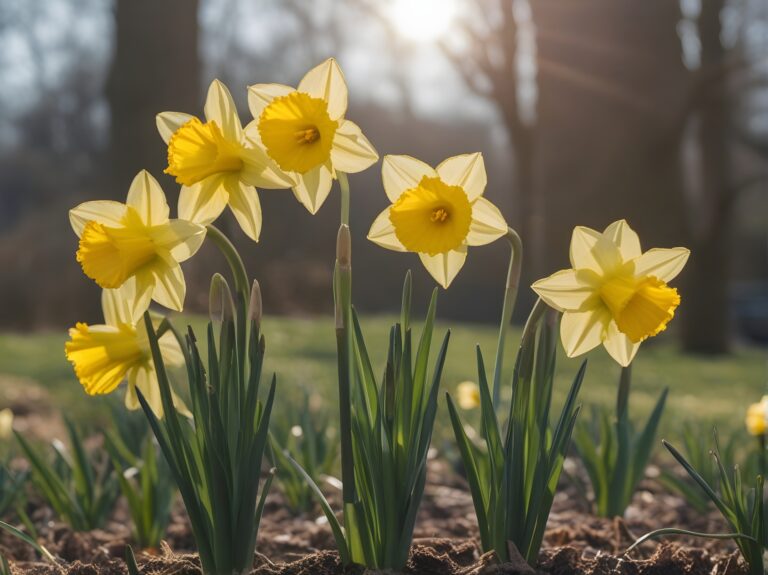
Daffodil Kedron is a distinctive mid-size jonquilla daffodil valued for its warm coloring, fragrance, and dependable performance in mild-winter and Southern gardens. Its flat, buttery to apricot-yellow petals deepen toward amber at the base, creating a glowing halo around a short, vivid orange cup. The cup is often described as disk-shaped or slightly crimped, giving each bloom a refined, old-fashioned character. Flowers are large for the plant’s height—about 2 3/4 to 3 inches across—and usually appear one to two per stem. Introduced by American hybridizer Willis H. Wheeler in 1974, Kedron is popular for its unique color, sweet scent, and reliability in the garden typical of jonquilla types.
Growth and Bloom Habit
Kedron typically grows about 8 to 12 inches tall, with slender foliage that suits the smaller scale of the flowers and makes the plant easy to tuck into beds, borders, and naturalized drifts. It blooms in mid-spring, often around March or April depending on climate, and its warm yellow-orange coloring stands out especially well in the soft light of early spring. Because it is a jonquilla hybrid, it is also appreciated for fragrance, making it a good choice near walkways, patios, porches, and other areas where its scent can be enjoyed up close.
Planting and Care
Plant Kedron bulbs in fall, after the soil begins to cool but before the ground freezes. Choose a site with full winter sun to light shade and well-drained soil, since daffodils dislike sitting in wet conditions. In heavier soils, improve drainage with compost or plant the bulbs on a slight rise. A general rule is to plant bulbs two to three times as deep as the bulb is tall, spacing them several inches apart. After flowering, allow the foliage to remain in place until it yellows naturally; this lets the leaves replenish the bulb for the following year’s bloom.
Garden Uses
Kedron is especially effective when planted in groups rather than as single bulbs. Small clusters in perennial borders provide early color before summer plants fill in, while larger drifts create a natural spring display under deciduous trees or along woodland edges. Its amber, apricot, and orange tones pair beautifully with blue muscari, white narcissus varieties, early irises, and spring-flowering shrubs. Because it is generally avoided by deer and rodents, it can also be useful in gardens where other spring bulbs are vulnerable.