Red Spider Lily Guide: Heirloom Fall Blooms for East Texas
I didn’t think the weather would ever break and that they would arrive, but they are finally here. Few flowers capture the magic of Southern gardening quite like the red spider lily, Lycoris radiata radiata. I first cherished these brilliant red pass-a-long flowers as a child, and they still fascinate me today. There is something almost unbelievable about flowers that suddenly spring from seemingly bare ground after the long, hot, dry days of summer. If horticulture has magic, red spider lilies certainly qualify.
Bloom Cycle & Growth Habits
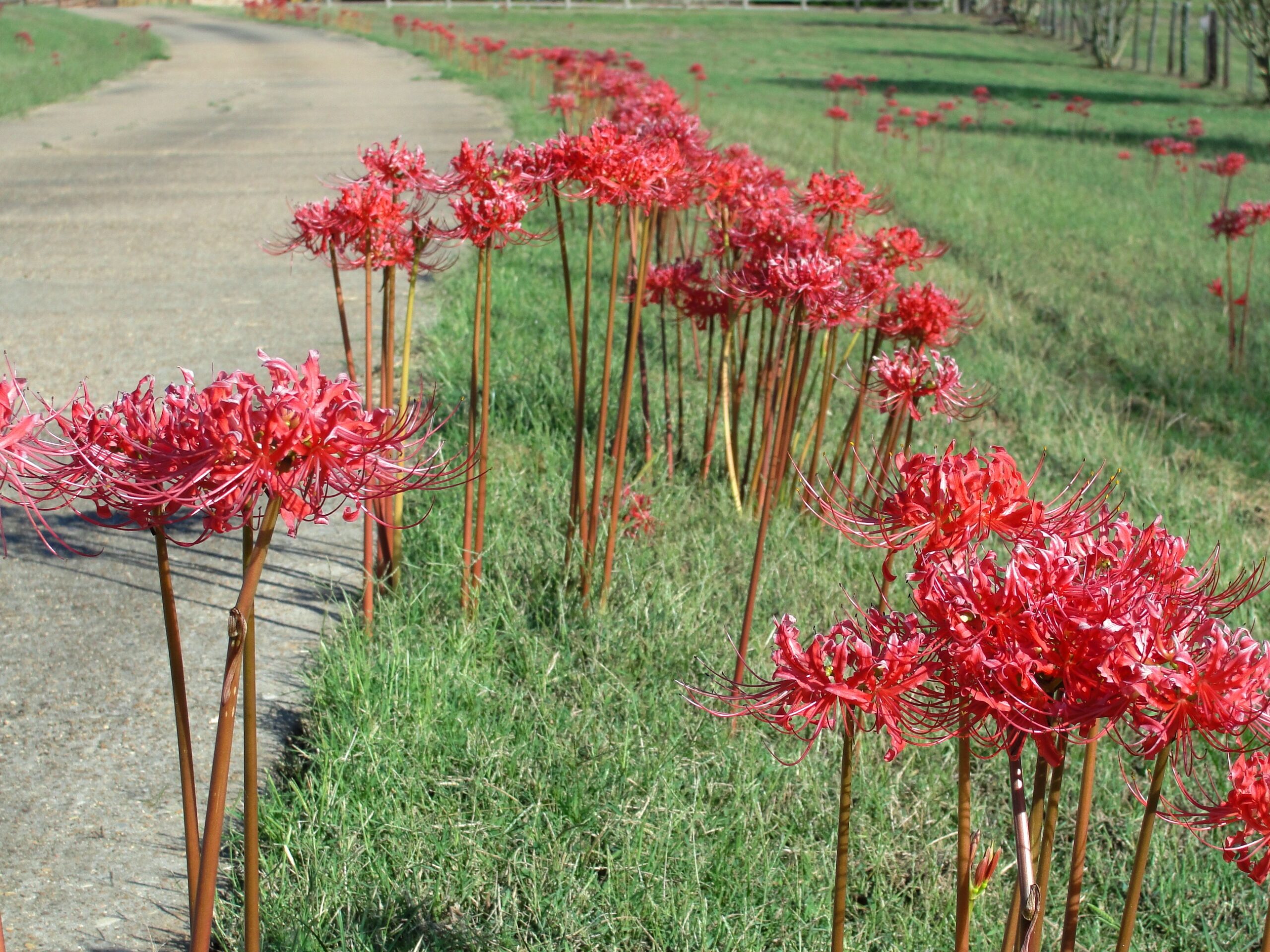
Their appearance is always dramatic. One day there is nothing, and seemingly overnight, slender stalks rise from the ground and produce clusters of bright scarlet flowers with long, curling stamens that give them their spider-like appearance. They have no leaves when they bloom, which is why Lycoris species are sometimes called naked ladies or surprise lilies. The foliage appears later, grows through the cool season, and disappears again before flowering time.
Regional Terminology & Common Names
Common names can be confusing. Along the Gulf Coast, spider lily often refers to native Hymenocallis species. Farther inland across much of the South, however, spider lily traditionally means the genus, Lycoris. They have also been called hurricane lilies because they often bloom during hurricane season and once “British soldiers” because masses of their bright red flowers resemble uniformed troops standing at attention.
Southern History & Historical Origin
Their Southern history is almost as interesting as the flowers themselves. Although native to eastern Asia, red spider lilies have been part of Southern gardens for generations. Garden writer Elizabeth Lawrence traced their early American history to New Bern, North Carolina, where Captain William Roberts reportedly brought bulbs home from Japan following Commodore Matthew Perry’s expedition there in the 1850s. Those few bulbs multiplied and were shared from garden to garden.
Reproduction & Pass-Along Traditions
That sharing tradition explains why spider lilies are still commonly found around old homesites, cemeteries, churches, and abandoned gardens. The familiar old Southern form is a sterile triploid that does not produce viable seed. Instead, it slowly multiplies underground by producing additional bulbs. Every old patch therefore represents generations of gardeners digging, dividing, and sharing bulbs with neighbors, friends, and family.
East Texas Growing & Propagation Tips
Spider lilies are wonderfully easy to grow in East Texas. They tolerate sun or partial shade and perform best in loose, well-drained soil. Once established, they require little attention and gradually form impressive colonies. Propagation is simply a matter of digging and dividing the bulbs. Summer dormancy is the traditional time to move them, although I have successfully transplanted them immediately after flowering.
Historic Landscape Display Example
One of the most memorable displays I have ever seen was at Grace Episcopal Church cemetery in St. Francisville, Louisiana. Beneath magnificent old trees draped with Spanish moss, hundreds of red spider lilies covered the historic cemetery. Martha Turnbull, creator of the gardens at nearby Rosedown Plantation, is buried there. I couldn’t help thinking she would approve of spending eternity in a beautiful Southern garden with hundreds of brilliant red British soldiers standing at attention.
Bulb Sources & Master Gardener Sale Details
This bulb will be among the many plants offered in the upcoming Bulbs to Blooms Conference and Sale on October 24th. Admission is free. The online store opens at 7:00 am on Oct 12 and closes at 10:00 pm on October 21. The in-person free conference begins at 9:00 am on October 24th. For more information, click here.. https://txmgsc.org/event/from-bulbs-to-blooms-conference-2026/