Growing Southern Peas
When you say “pea” to most gardeners in the world, they think of “English” peas that thrive in cool, moist environments. But to most Southerners, a hot-weather legume from Africa, more related to beans, is the norm. Despite what others say about our peas being “cattle food,” many of our ancestors dined on them practically daily throughout their lives. They are easy to grow, productive, and nutritious, being high in both fiber and protein. Southern peas come in wide varieties and colors, including both standard types and plump ones crowded into their pods known as “crowders.” I never met any fresh Southern pea I didn’t like. You can get peas dried or canned, but none hold a candle to fresh ones from your own garden or a local farmer.
Southern peas are a warm-season crop that can’t tolerate frosts or freezes. They can’t even stand cool days or nights. They thrive on heat, so they should be planted well after the last frost. This is generally April or later in East Texas. They can be planted anytime up until July 4th, so if you start early, you can produce two crops each year. Southern peas are easily planted from seed. Once the seedlings are established and about 3-4 inches tall, thin them to 6-8 inches apart.
Southern peas require full sun (at least 8 hours of direct sun each day). They aren’t terribly picky about soil types, but should be planted in well-drained areas. Incorporate 1 pound of a complete garden fertilizer (13-13-13, 10-20-10, etc.) per 100 square feet of bed or every 35 feet of row. When I have enough, I use chicken litter. They do not require sidedressing with additional nitrogen fertilizer like most of our other crops. The ideal soil pH for growing Southern peas is 6.0-7.0.
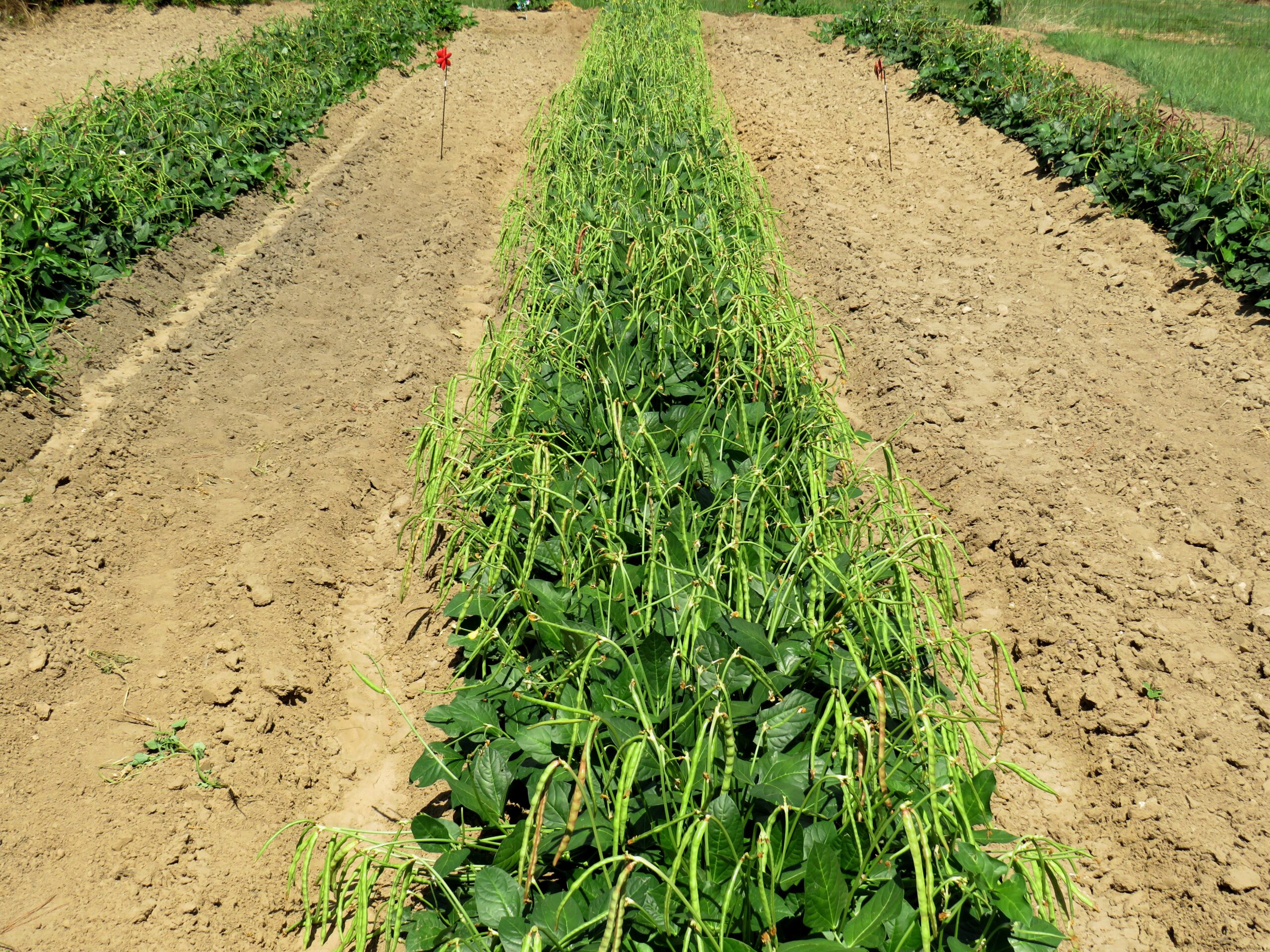
Create a raised row about 4-6 inches high and 16-24 inches wide. Multiple rows should be around 36 inches apart. Open a shallow trench 1 ½ inches deep with the corner of a hoe or a stick. Drop the seed several inches apart to ensure a good stand. Cover lightly with loose soil using a hoe or garden rake. It takes a decent-sized block or row of peas to produce enough for eating or freezing, so they aren’t well-suited to container culture.
Southern peas are easy to grow and fairly drought-tolerant. My most frequent problem is aphids, which can be controlled with an appropriate insecticide applied following all label directions.
Depending on the variety, Southern peas are generally ready to pick 70-90 days from planting the seed. Pick fresh peas when the pods turn yellowish, reddish, or purple, depending on the variety, and when the peas inside are plump. Be sure to pick them before they turn brown and dry out. The peas should pop out easily when you press on the pod seam with your thumb. Peas picked too green are much more difficult, if not impossible, to shell. Small, thin, undeveloped pea pods are sometimes picked green and cooked as “snaps” with the shelled peas. It’s easy to save your own pea seed for next year by picking, shelling, and saving the dried peas in the freezer.
Some recommended Southern pea varieties for Texas include Black Crowder (crowder), California #5 (black-eye), Cream #40 (cream), Mississippi Silver Skin (crowder), Pink Eye Purple Hull (purple hull), Zipper Cream (cream, crowder), and many more. Black-eyed peas, cow peas, crowder peas, and field peas are all different names referring to our Southern peas, which are native to Africa and should be a staple on every East Texas table. In East Texas, pink-eyed purple hulls and creams tend to be the most popular, while black-eyed peas are the least popular.
Greg Grant, Ph.D., is the Smith County horticulturist and Master Gardener coordinator for the Texas A&M AgriLife Extension Service in Tyler. He is the author of Texas Fruit and Vegetable Gardening, Texas Home Landscaping, Heirloom Gardening in the South, and The Rose Rustlers. You can read his “Greg’s Ramblings” blog at arborgate.com, find his “In Greg’s Garden” column in each issue of Texas Gardener magazine (texasgardener.com), or follow him on Facebook at “Greg Grant Gardens” or “Pines, Pawpaws, and Pocket Prairies.” More science-based lawn and gardening information from the Texas A&M AgriLife Extension Service can be found at aggieturf.tamu.edu and aggie-horticulture.tamu.edu.