
The Hungry Caterpillar —Butterflies Are Caterpillars First
Every beautiful butterfly was once a caterpillar, and caterpillars have to eat. This may surprise you, but the average caterpillar has a very restrictive diet, feeding on only a few plants, and some caterpillars can only eat one type of plant. We call these host plants. And without them, there would be no butterflies.
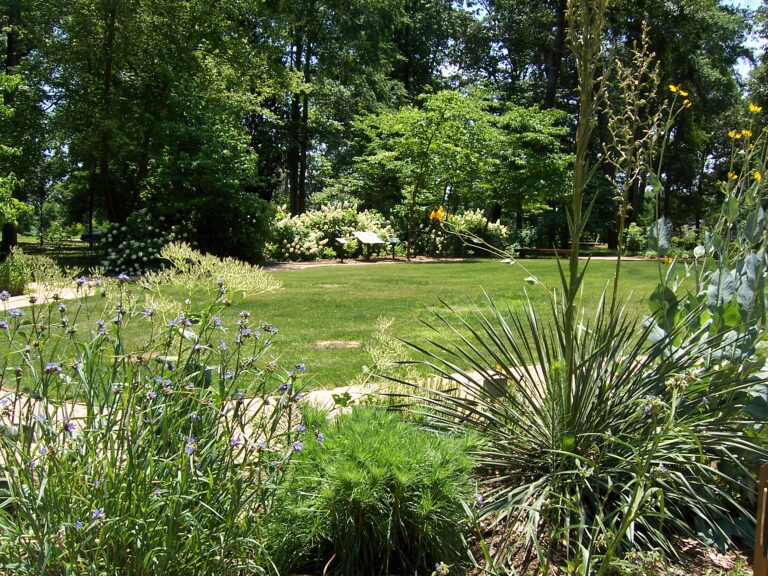
So, what host plants can we grow to support our local caterpillar population here in East Texas? Well, you’re in luck! There’s something for every type of garden.
Do you want more colorful flowers in your garden? Consider adding Snapdragons (Antirrhinum) for Common Buckeye caterpillars or Hollyhocks (Alcea) for Painted Lady caterpillars. Buckeye butterflies lay their eggs on Snapdragons, and once the eggs hatch, the larvae feed on the snapdragons’ leaves. Painted Lady butterflies use Hollyhocks in the same way.
How about a gorgeous climbing flower, perfect for archways, fences, and trellises? Passion Flower (Passiflora) is a wonderful option. Passion Flower vines are the main host plant for Gulf Fritillary caterpillars. Purple Passion Flowers grow exceptionally well in our area, being native to the southeastern United States. And for the bird watchers out there, Hummingbirds also love all the flowers mentioned above.
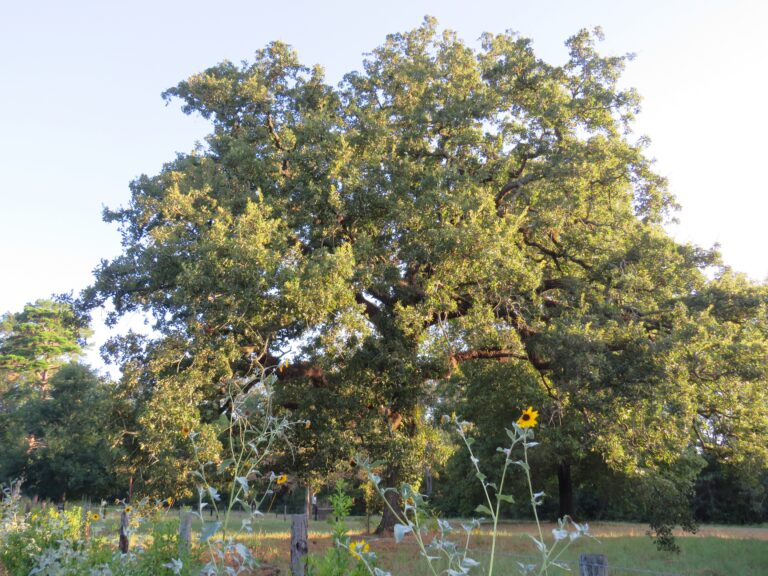
Looking to add a new tree to your property? Many butterflies rely on different trees as host plants for their offspring. The beautiful Magnolia Virginiana is the Eastern Tiger Swallowtail’s favorite. The tree is well-equipped for our climate, being native to the southeastern United States. Eastern Tiger Swallowtail caterpillars also love Ash Trees (Fraxinus) and Willows (Salix). They need these host trees to survive. Viceroy caterpillars rely on willows as well. Spicebush Swallowtail caterpillars love our native Sassafras Albidum trees (as well as spicebushes, of course, which they’re named after). Giant Swallowtail caterpillars can feed on most types of citrus trees. All these trees provide beauty and shade to your landscape, and necessary nutrients to caterpillars. It’s a win-win.
Want a unique native fruit tree in your yard? Look no further than the Pawpaw tree (Asimina Triloba). This tree used to be one of the most common trees in Eastern America. Sadly, now it’s so rare that hardly anyone has heard of it. The tree was such an important source of food for the Shawnee Tribe that they named a month after the Pawpaw in their calendar. The Pawpaw tree is the only host plant that Zebra Swallowtail larvae can feed on. If we lose Pawpaw trees, we lose Zebra Swallowtails. Together we can help prevent that. Consider planting a Pawpaw tree in your backyard. You likely won’t find one to buy at your local nursery (though it never hurts to ask), but there are many places online that sell them.
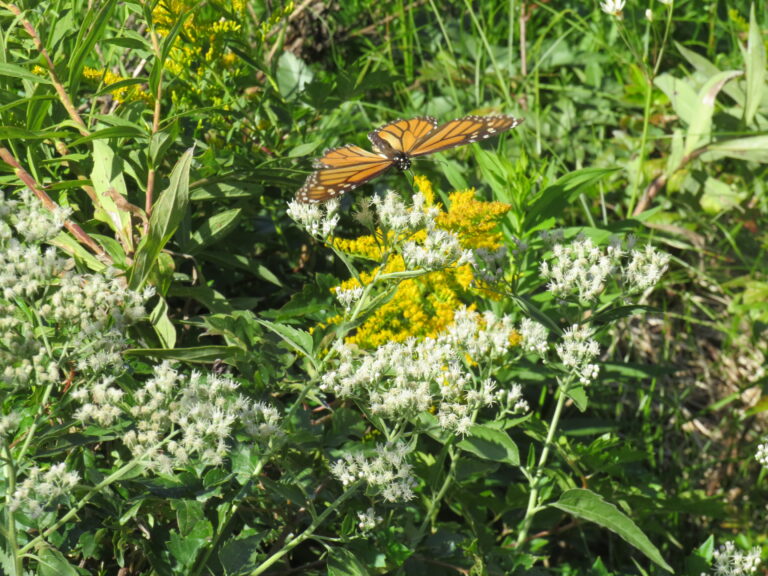
Don’t have room for a whole tree? Want to help caterpillars with a small space? Don’t worry, even a window box garden can be a great place for a caterpillar to grow up. Here are a few flower and herb host plants that can be grown in small spaces and pots. Dill, Fennel, and Parsley are Black Swallowtail’s primary hosts. A little herb garden can be a caterpillar heaven. Mallows and Thistles can be grown in pots, and Painted Lady caterpillars love them. If you have just a tiny bit of growing space and can only grow one thing, let it be Milkweed (Asclepias). Milkweed isn’t a weed at all, but rather a lovely flower that blooms in many colors. It is also the only host plant for our state butterfly, The Monarch. Monarch butterflies migrate from Canada to Mexico for the winter, and they depend on milkweed for its nectar to feed on and its leaves for it’s larvae. Without Milkweed here in Texas, they won’t be able to survive their epic journey. Due to urban expansion and overuse of herbicides, there is far less milkweed for Monarchs.
Texas A&M University published in their online article All About Monarchs, that the Monarch Butterfly population “has declined about 80% in just the past 20 years.” This is devastating. It is not hopeless, though. We can grow milkweed! And while one plant isn’t going to save the entire Monarch population, it can save the life of one caterpillar.
To us humans, a plant might just be a plant, but to a caterpillar, that plant is their whole world. Let’s get out there and plant some worlds, shall we? Happy Gardening!
Smith County Master Gardeners are volunteer educators certified and coordinated by the Texas A&M AgriLife Extension Service.
Angelise Trent
Smith County Master Gardener