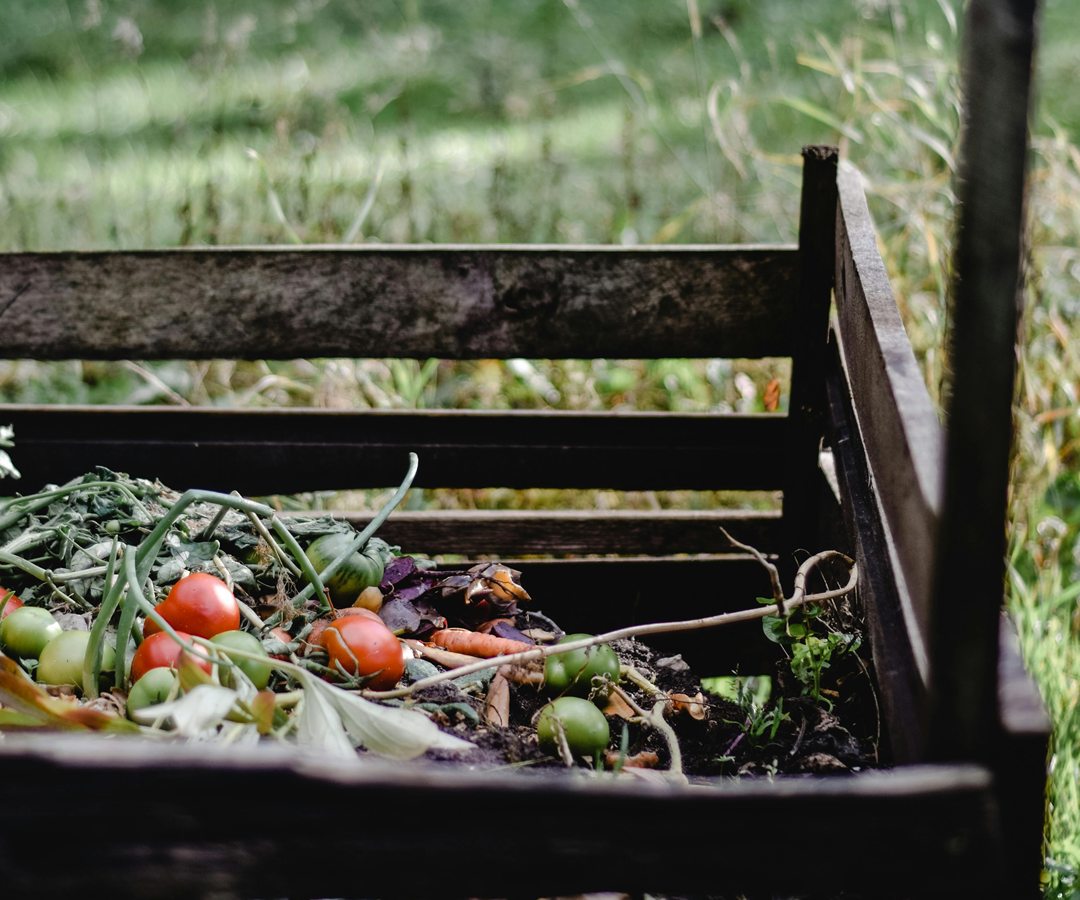
Start Composting; What? Why? How?
Compost is nature’s gift to gardeners. It is nutrient-dense humus from decomposed biological organisms that enriches the soil and gives nutrients to plants, which in turn, reduces your need to buy chemical fertilizer. Compost can amend sandy soil to help retain water and help plants take root, and it can amend clay soil to break up compaction and bring more oxygen to plant roots.
In other words, it’s like a little bit of pixie dust that helps your plants grow.
Even if you’re not a gardener, composting is still a good choice for you! The USDA estimates that 30 – 40% of food in the US gets thrown away. A significant portion of that waste is compostable. Even if you have just a little compost pile, you’ve helped keep that much more waste from ending up in a plastic bag in a landfill. Every little bit counts!
So you want to compost but don’t know where to start?
Not to worry, there are many different methods of composting, and you can get started today for free.
To start, you’ll need a mix of “Browns,” which add Carbon. Items such as dried leaves, cardboard, sawdust, shredded paper, straw or woodchips, and “Greens,” which add Nitrogen. Items such as raw fruits or vegetable scraps, grass clippings, eggshells, weeds, even manure, or coffee grounds; even though they are brown in color, they are counted as greens due to their Nitrogen content. (Important Tip: You’ll want to avoid meat, bones, and dairy products. They’ll attract critters and odors. Even though they are biodegradable, this just isn’t the place for them.) To turn waste into soil quickly and efficiently, and to keep away potential foul odors, Texas A&M University recommends a ratio of 3 parts Browns to 1 part Greens.
You’ll place your mix of browns and greens in a particular area, whether that be a traditional compost bin, a three-tiered compost bin, a tumbler, a worm bin, a backyard “trench,” or a simple pile in the backyard.
(Bonus Tip: If you have a wood chipper or leaf shredder, it can help you compost! Breaking leaves or wood into smaller pieces will help it decompose faster.)
If you’re a lazy gardener like me (or are busy with other commitments in your life), and don’t mind waiting 6-12 months for your compost to be ready, then a pile would be the easiest method for you. You don’t have to do anything other than keep adding to it and let nature take its course. Alternatively, you could place them in a traditional compost bin or dig a small trench in your backyard to bury them. There is the initial work of digging the trench, or buying or building the compost bin; though still good, low-maintenance options. Plus, it’s a little more organized than a pile.
If you want your compost to be ready faster (~1 to 4 months) and are willing to put in a little more effort, a three-tiered compost bin might be for you. This method works best if you have a large family or a lot of organic material.
For this method, you’ll start by buying or building a compost bin with three separate compartments, and ideally a lid. Each compartment should be at least 3’x3’x3’ for the best results. The first compartment is where you’ll put your browns and greens. Keep adding to it, and keep it moist (like a wrung-out sponge) with your garden hose. Once bin 1 is full, you’ll turn the compost into bin 2, the middle one, where it’ll break down some more. Turning your compost brings in oxygen and helps everything decompose faster. Feel free to occasionally mix your compost around in its bin with a pitchfork to bring in even more oxygen.
When your second bin is full, you can move it to your third bin. There in the third bin, it’ll finish curing. Then, when it’s dark and crumbly like a rich chocolate cake, it’s ready to use in your garden. It should smell earthy, not rotten.
Keep adding new compost to your first bin as you go and repeat the cycle.
Turning your compost, keeping it moist, and covered will keep it hot (ideally within 130F – 150F) and alive with microorganisms.
Don’t have enough room or organic waste for a three-tier compost system, but still want beautiful compost quickly? A compost tumbler is a great option for you! They are readily available at garden centers, hardware stores, or online. Just throw in your browns and greens, keep moist, and get tumbling, turn it about 2-3 times a week. Compost tumblers are great for beginners, smaller families, or apartment patios. Plus, they’re low maintenance with a quick composting time, and who doesn’t like that?
You can also compost with worms. They are gardeners’ best friends! Let the worms do the work for you. To learn more about worm composting (Vermiculture), visit the article: Worms Manufacture “Black Gold” from Texas A&M AgriLife Extension, at: https://bexar-tx.tamu.edu/homehort/archives-of-weekly-articles-davids-plant-of-the-week/worms-manufacture-black-gold/
Smith County Master Gardeners are volunteer educators certified and coordinated by the Texas A&M AgriLife Extension Service.
Kimberly Trent
Smith County Master Gardener