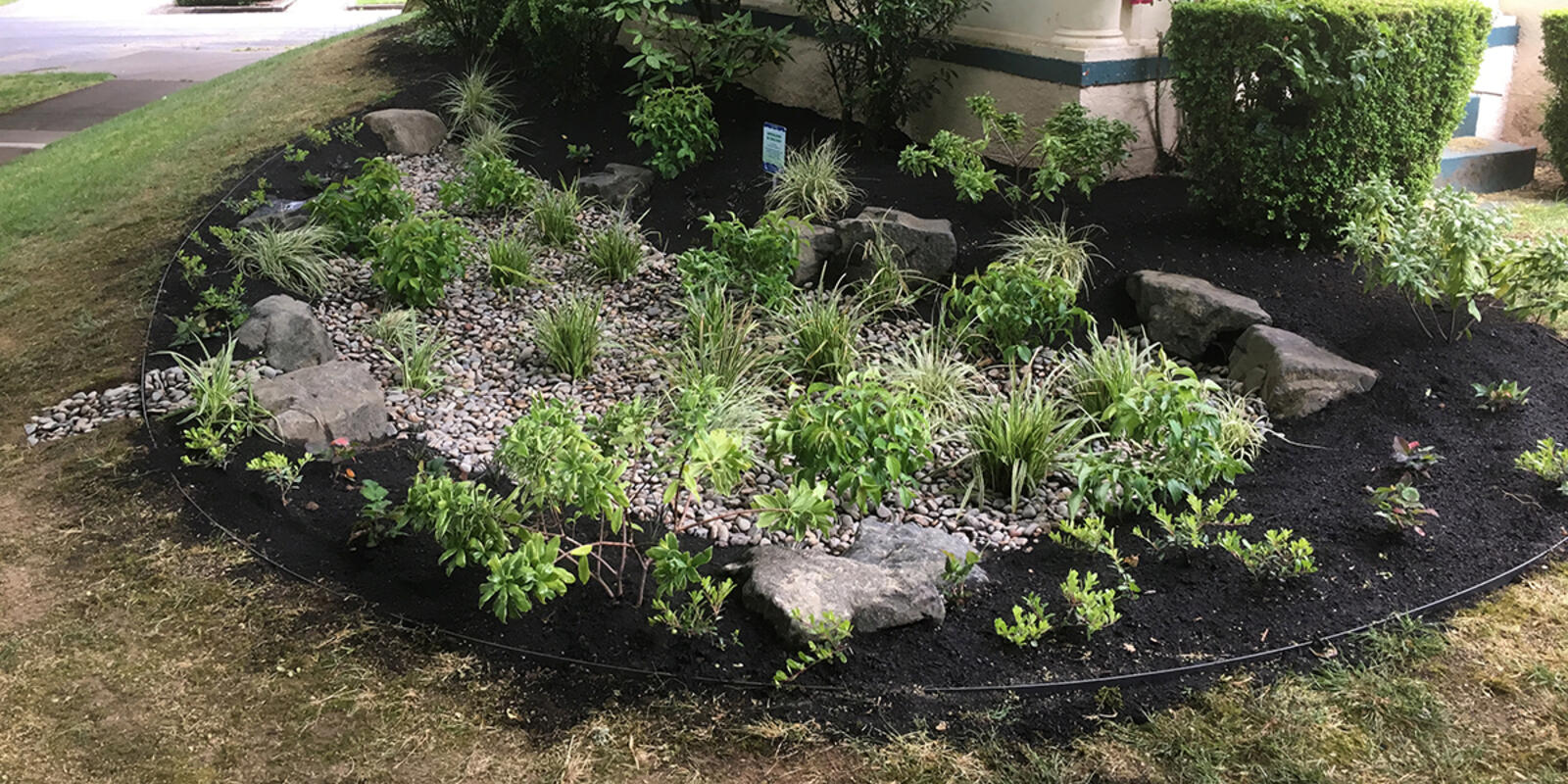
Rain Gardens: A Guide to Managing Stormwater
A rain garden is a shallow basin designed to slow, capture, and temporarily hold stormwater runoff for a day or two. This duration prevents mosquito breeding while allowing water to percolate into the soil, reducing flooding and supporting groundwater recharge.
What Are the Key Components and Zones of a Rain Garden?
A rain garden consists of a shallow basin for temporary ponding (a few inches deep) and a supporting plant community. It is structured into distinct zones based on water depth:
- Center of the Basin: Holds water the longest; best suited for deep-rooted plants that tolerate temporary wet conditions (“wet feet”).
- Shallow Margins: Ideal for moisture-loving plants that prefer shorter periods of wetness.
- Berm: The raised outer ridge; best for plants that prefer drier conditions.
What Native Plants Work Best in a Rain Garden?
Native plants are ideal because their deep roots increase resilience during dry periods. (Note: Watering is required while plants become established).
- Perennials: Louisiana iris, swamp milkweed, blue mistflower, bee balm, swamp sunflower, Joe-Pye weed, Texas star hibiscus, Texas spider lily, giant coneflower, cardinal flower, and ironweed.
- Shrubs: Buttonbush, southern wax myrtle, and dwarf palmetto.
- Trees: Bald cypress, river birch, and paw paw.
- Grasses: Brushy bluestem, inland sea oats, and seep muhly.
What is a Bioswale and How Does It Differ From a Rain Garden?
A bioswale is a plant-filled shallow ditch that carries runoff water toward a rain garden. While planted with moisture-tolerant plants, a bioswale routes water rather than collecting and holding it like a rain garden does.
How Should You Position a Rain Garden Near Structures?
When capturing water from roof downspouts and gutters, use a bioswale to lead water to a rain garden located at least ten feet away from the structure’s foundation to prevent water damage.

Cindy Cronin
Smith County Master Gardener volunteer educators are certified and coordinated by the Texas A&M AgriLife Extension Service.